

iPhone vs Android comparisons are endless discussions about which one is better.
There will never be a true winner.
However, we will continue to strive to help you find your personal choice.
iOS 17 and Android 14 are the latest versions of both operating systems and both offer a simple, user-friendly experience and many similar or identical features.
However, there are still important differences to note.
We compare iPhone and Android to explore the individual advantages of each mobile platform and help you choose the right platform for you the next time you buy a smartphone.
To see the current Android and iOS models, check out Pixel 8 Pro and iPhone 15 Pro Max to get a general idea of how the two phones compare.
iPhone vs Android: Why is the iPhone better?

It may seem like a superficial reason, but Apple makes a variety of tech products, so it makes sense to buy an iPhone if you have a Mac, iPad, and Apple Watch.
iPhone vs Android comparisons are endless discussions about which one is better.
iPhone vs Android comparisons are endless discussions about which one is better.
However, we will continue to strive to help you find your personal choice. iOS 17 and Android 14 are the latest versions of both operating systems and both offer a simple, user-friendly experience and many similar or identical features. However, there are still important differences to note. We compare iPhone and Android to explore the individual advantages of each mobile platform and help you choose the right platform for you the next time you buy a smartphone. To see the current Android and iOS models, check out Pixel 8 Pro and iPhone 15 Pro Max to get a general idea of how the two phones compare.
Apple has developed a variety of continuity features to help you transfer work and data from one device to another, and these features can save you time. For example, consider Handoff, which seamlessly transfers calls from iPhone and Safari web pages between iOS and macOS. The Universal Clipboard allows text copied from one platform to be used on another. Another popular app is Camera Continuity, which lets you take photos with your iPhone's camera and scan documents, then view and edit them on your Mac. Apple Pay lets you use your iPhone's biometric authentication to complete purchases on your Mac. Some Android phone makers have hardware ecosystems similar to Apple's, and even some that come as close as Samsung don't achieve the deep integration possible between the iPhone and other Apple devices.
However, we will continue to strive to help you find your personal choice.
iOS 17 and Android 14 are the latest versions of both operating systems and both offer a simple, user-friendly experience and many similar or identical features.
However, there are still important differences to note.
We compare iPhone and Android to explore the individual advantages of each mobile platform and help you choose the right platform for you the next time you buy a smartphone.
To see the current Android and iOS models, check out Pixel 8 Pro and iPhone 15 Pro Max to get a general idea of how the two phones compare.
Microsoft is helping Google close the gap with its new Your Phone app for Windows. This app allows Android users to respond to messages and notifications from their computer. However, the experience is a bit clunky and still needs work. There are many great examples of continuity in iOS, iPadOS, watchOS, and macOS. The iPhone is an important piece of this puzzle, especially now that iPhone apps can be seamlessly ported to macOS. Power users in the Apple ecosystem have a lot to gain by adding an iPhone to their repertoire. Not to mention friends and family who use iMessage and FaceTime to keep in touch.
Third party apps are better.
It's a matter of personal preference, of course, but as someone who bounces between iOS and Android, I'm constantly impressed by the quality of apps made by iOS developers and especially disappointed by Android developers.
Do not get me wrong. Android has great software and developers, but in my experience, they are harder to find. For example, one of our favorite Twitter apps, Tweetbot 5, is exclusive to iOS. In contrast, Fenix2, one of the best third-party Twitter apps we've come across on Android, falls short in comparison. (RIP third-party Twitter client.) One of our contributors, Henry T. Casey likes to use Bear to write blog posts on her Mac and iPhone, but she's had a hard time finding this versatile and useful note-taking app for Android.
In fact, apps from well-known companies, from banks to airlines, can be a bit smoother and cleaner on iOS than on Android, with better integration with the phone's core services like Wallet. Various accessories are available. If you go to a Best Buy or Target store, you'll find tons of cases for every iPhone Apple makes. That's something that can't be said about Android products, except for flagship devices from big companies. If you're ditching the semi-healthy selection of products made for the latest Galaxy S devices, you're out of luck. Don't expect a variety of accessories for your new Pixel or Motorola phone at brick-and-mortar stores. Sure, you can go online and get a $4 box from Amazon, but you're guaranteed to get what you paid for.
The selection and availability of iPhone cases, screen protectors, car mounts, and more is far greater than what you'll find for other phones, and that's more important than most people realize. iPhone owners will never have the problem of not finding a case they like.
App tracking notifications provide enhanced privacy controls. One of the latest iOS versions introduced app tracking notifications that allow you to opt out of apps tracking you on your phone. This was a huge win for privacy advocates and a huge blow to many third-party companies like Facebook. Android doesn't have this feature and I doubt it ever will. Apple still collects a lot of data about its users, but iOS still has some flexibility when it comes to third parties, so don't be fooled into thinking that iOS is more private than Android. It's very satisfying to have an app follow you.

No bloatware. Regardless of how you purchased your iPhone, where you purchased it, or what iPhone you purchased, you won't see any pre-installed bloatware at all when you turn it on for the first time. That means the app is clean to begin with, with no unnecessary energy or data hogs to cause problems behind the scenes. These phones are very affordable, especially if you've seen the new Android phones from your carrier. Spending $1,800 on the Galaxy Z Fold 5 doesn't mean AT&T customers will be spared the same humiliation as CNN and DirecTV. The situation can be even worse if you buy a cheap, heavily subsidized device from a discount company.
Android buyers can avoid bloatware by purchasing one of the best unlocked phones without a service contract. It also depends on the company. For example, an unlocked Pixel phone won't be interrupted by third-party apps. On the other hand, some unlocked phones come with weird and unwanted sponsored software (or ads). OnePlus is the latest example of this, and Samsung's ads for its smartphones are annoying.
You can get software updates faster. Android phones get updates less often than iPhones, and when they do, they're often infrequent and delayed, with the exception of the Google Pixel.
The number of updates you can receive over the lifetime of your Android phone depends on the price, the carrier you buy from (if any) and the manufacturer of your phone. Our software support policy is as follows: The update policies of Android phone manufacturers have improved in recent years, but Apple still offers more. Take the iPhone XR, which runs iOS 17 even though it was released five years ago. In addition, when a new iOS version is released, anyone can use it on the same day and at the same time, and it can be installed immediately on all models that support this version. Android releases, on the other hand, are rolled out sequentially to individual phones, rather than model by model. This will better support retail businesses. Let's say you have a problem with your iPhone and need it repaired. Or, you may prefer to hire a professional to install your screen protector and apply the film without bubbles or dust. It's good to have somewhere to go no matter the problem, and what better place for iPhone users than the Apple Store? Android phone owners don't have to enjoy this luxury. If you need a new battery or screen replacement and you didn't purchase a protection plan from the store you purchased your device from, you may need to return it to the manufacturer. This is a very time consuming task as we rely on our phones every day. Some reputable repair shops like uBreakiFix can help bridge the gap, just like they do with Pixel phones.
Third party apps are better.
It's a matter of personal preference, of course, but as someone who bounces between iOS and Android, I'm constantly impressed by the quality of apps made by iOS developers and especially disappointed by Android developers.
Why
Android is better?

There are phones in every price range.

Most of the world's smartphones run on Android, and many companies make Android phones, making them available at a variety of price points. There are sub-$500 budget phones like the Pixel 7a, the best small phones and the best big phones, phablets and foldables priced over $1,000. No matter how much you spend, you can find an Android device that fits your budget or offers exclusive features. The same goes for iPhones, which have historically been expensive at launch but have come down in price in subsequent generations. Apple's cheapest iPhone is the iPhone SE (2022), which is a fantastic device with excellent performance at $429, but it has an outdated design and a screen that may be too small for some users. It is adaptable. iOS and Android have evolved over the years, but Android has always had a reputation as a platform for users who want to customize and personalize their devices. It starts with a home screen launcher that offers dynamic widgets and the ability to discreetly place apps anywhere on the screen or in a drawer. This is a feature that iPhone recently introduced in iOS 14. You can also change the switch to: An Android phone with an alternative version downloaded from the Google Play Store. Android also allows you to download third-party replacements for core services (eg web browser, keyboard, media player) and set them as default by selecting them from the pre-installed apps on your phone. iOS has made improvements in this area over the years, but implementation is still somewhat difficult. Finally, we have to talk about manufacturer skins. Android system software customized by a particular phone manufacturer to provide a user interface and additional features, often including the ability to create top-down themes tailored to the user's environment. Some Android fans prefer Google's "native" interpretation of Android. However, many users prefer custom software from their phone manufacturers, such as Samsung One UI or OnePlus OxygenOS, for additional features such as the ability to take scrolling screenshots and hide photos and videos in password protected folders.
But Google changed that with Android 12, which brings the new Material You design language. This direction builds on the Android look and feel of recent years and offers more customization. 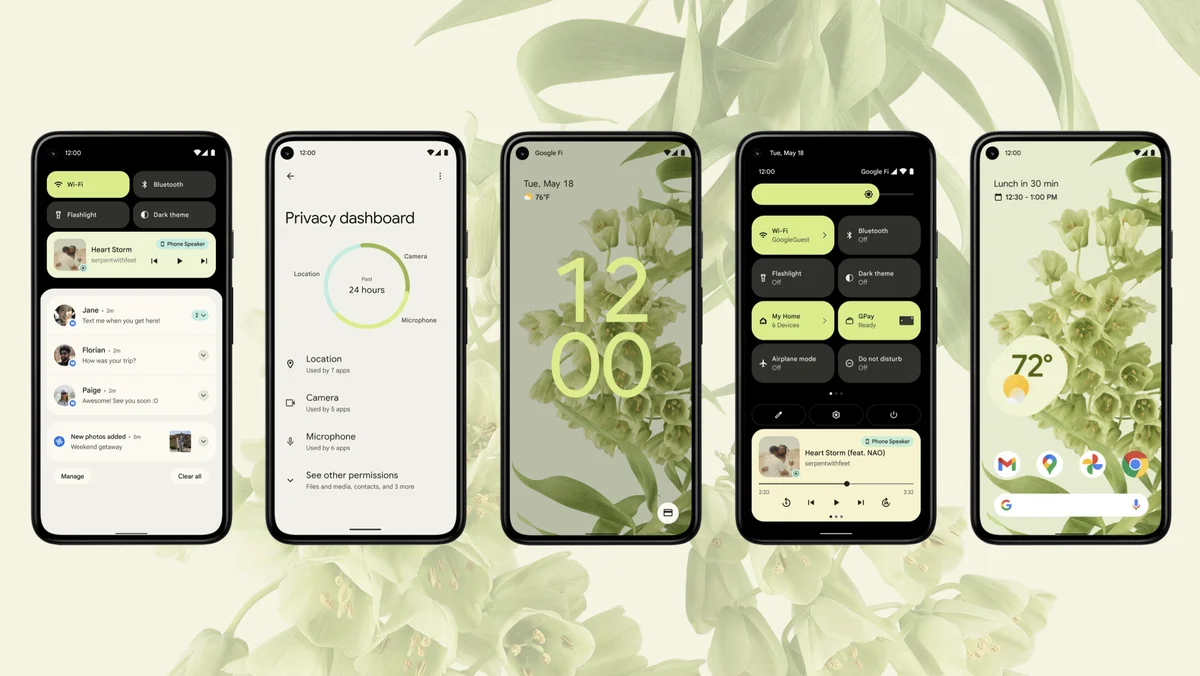
There is a pseudo-theme system that adapts to the colors of the wallpaper and uses those colors throughout the system. Memory is (sometimes) expandable. Expandable storage is less popular these days, but some Android phones still offer it. This allows you to use a microSD card to store photos, apps, and other media that don't fit in the device's internal memory.
Considering the exorbitant prices Apple and other phone makers charge to double or quadruple the storage when you purchase a device, this is a huge plus. Why add an extra $100-$150 to the price of a new phone for 128GB or 256GB of extra storage (not sure if you need it) when you can drop $70 later and fit a 512 UK?
Additionally, some Android devices still come with a headphone jack, although it's rare on high-end phones these days. This is a much requested feature from Apple in its 2016 phones. This is a big problem for people who still want to use their trusty old wi
USB-C is universal. These days, Android phones mostly rely on USB-C ports for charging and data transfer. This is lightweight and great for people who like to carry a single cable. USB-C is found on most computers and the Nintendo Switch these days. It's a beautiful thing.
While Apple's Lightning cable is a relic of a time when every tech company had to create its own connector, USB-C is a complete single-port solution that the industry is working toward. It also opens the door to faster charging technology.
The iPhone 15 series has now switched to USB-C, in line with Apple's other mobile devices. But it will be a long time before every iPhone user ditches a device with a Lightning port.
There is a real file system (supports drag and drop from the computer). Most people don't need to get their hands dirty with their smartphone's file system. However, it's good to know that Android gives you this option if you want. Even better, when you connect your Android phone to your Windows PC, you can easily drag and drop files into folders as if the device were a single drive.
This means you can quickly transfer and store your media library and documents locally without having to subscribe to a monthly cloud service, especially if you have a large library. The iPhone hides its user file system for everything except photos. This can be very frustrating when working with music, documents and other media.
Some Android phones, such as the Galaxy S23 Ultra, also have a special PC or screen projection feature that allows you to view and use your device on your desktop. Samsung's DeX interface is a case in point. With that kind of versatility, a high-end Android phone could be a legitimate replacement for the best Chromebook or one of the similar ultraportable laptops. Innovative features are usually the first to appear on Android phones. Of course, Apple has many treasures. But that's just one company, one philosophy. As a result, iOS can be slow to adapt to new technologies, or at least slower than the Android community. With so many companies making Android phones, it's no surprise that Android partners are ahead of Apple in the market with their phone innovations. Wireless charging, fast charging, NFC, 4G LTE, 5G, OLED displays, in-screen fingerprint sensors, water resistance, and multi-lens cameras came to Android devices before the iPhone, along with software advancements like multitasking and true copying. Supports gluing multiple windows. Of course, that doesn't mean Apple itself hasn't made progress. iPhone But with so many Android phones coming out each year from a variety of vendors, it's only a matter of scope whether the hardware running Google's platform can adapt more quickly.
Which one should I choose? Google Pixel 7 Pro and iPhone 14 Pro Max

So which should you choose: iPhone or Android? Both platforms have their pros and cons, and like most purchasing decisions, your choice will depend on what's most important to you.
Owning an iPhone is an easier and more convenient experience. It's a no-brainer, and since Apple is the most popular iPhone brand, you'll get plenty of support wherever you go, whether you need a battery replacement or a new case. Also, at least in the US, iMessage has its attractions.
In this regard, owning an Android device is a little more difficult. But it gives you more freedom by giving you more choices: how much you spend, what hardware and software features you choose, and how you configure and customize your experience.
If you're very picky about the technology you use, you might find Android more comfortable (dare I say fun), but you'll bemoan the relative lack of high-quality apps and accessories (like Twitter). If you're wondering which device to switch to, there's no better place to start than our list of the best iPhone and Android phones.
Whichever device you choose, make sure it matches your operating system preferences.
Which one should I choose?
Google Pixel 7 Pro and iPhone 14 Pro Max
In this regard, owning an Android device is a little more difficult.
But it gives you more freedom by giving you more choices: how much you spend, what hardware and software features you choose, and how you configure and customize your experience.
If you're wondering which device to switch to, there's no better place to start than our list of the best iPhone and Android phones.


0 Comments
WHAT'S YOUR OPINION ?